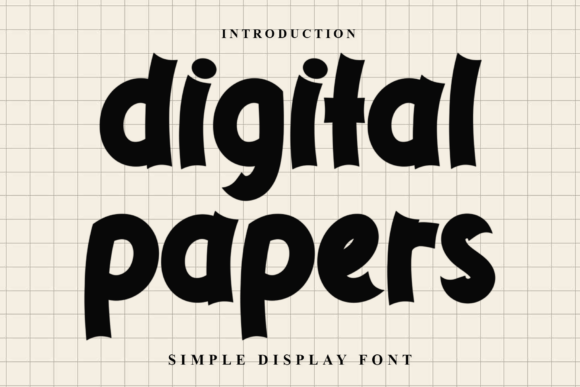
Digital Papers Font for Web Design
Testing Digital Papers in a hero section of a boutique online store, I was immediately drawn to its warm, approachable character. The round, playful strokes give the font a friendly vibe that feels right at home in a creative or personal project. As a web designer, I often look for fonts that can bring personality without sacrificing clarity, and Digital Papers delivers on both fronts.
Digital Papers for Creative Portfolio Websites
When working on a creative portfolio homepage, I chose Digital Papers for the main headline. Its casual yet polished look added a sense of authenticity to the site’s branding. The font pairs well with modern UI elements, making it ideal for showcasing work in a way that feels inviting rather than rigid. It’s especially effective when used alongside subtle background textures or soft color gradients.
For sections like project titles or service headings, Digital Papers adds visual interest without overwhelming the layout. It works best when paired with a clean sans serif font for body text, ensuring the design remains readable and professional.
Using Digital Papers in Mobile Layouts
On mobile devices, the rounded strokes of Digital Papers maintain their charm while still being legible. I tested it on a product landing page with a dark background and found that it stood out without needing extra spacing or sizing adjustments. This makes it a great choice for CTA buttons or short promotional phrases where clarity is key.
However, I noticed that using Digital Papers for long paragraphs reduced readability. It’s better suited for headlines, subheadings, or decorative accents rather than body copy. When designing for smaller screens, keeping the font usage minimal helps maintain a smooth user experience.
Digital Papers for Online Store Banners
For an e-commerce site selling handmade goods, I used Digital Papers on the banner header. The font’s friendly tone aligned perfectly with the brand’s message of warmth and creativity. It complemented the soft pastel colors and natural imagery on the page, creating a cohesive aesthetic that felt welcoming to visitors.
The font’s versatility allowed it to work across different sections of the site, from product titles to promotional banners. Its display font style made it stand out in a way that traditional fonts couldn’t, helping to reinforce the brand’s unique identity.
Pairing Digital Papers with Other Fonts
When pairing Digital Papers with other fonts, I leaned toward simple sans serifs for body text. This contrast helped balance the font’s playful nature with a more structured, professional feel. For example, using a clean, modern sans serif like Open Sans or Lato alongside Digital Papers created a harmonious visual rhythm that enhanced the overall design.
For editorial-style layouts, I experimented with a serif font like Playfair Display to add depth and elegance. This combination worked well for blog headers or feature sections, giving the site a more refined look while still maintaining the warmth of Digital Papers.
Digital Papers for Coaching and Course Websites
On a coaching website, I used Digital Papers for the main heading of a course sales page. The font’s friendly appearance helped build trust with potential clients, making the content feel more approachable. It also worked well as a logo font, adding a personal touch to the brand’s visual identity.
For call-to-action buttons, I kept the font size consistent with the surrounding text to avoid visual clutter. This ensured that the button remained prominent without disrupting the flow of the page. The font’s readability on light backgrounds made it a solid choice for these types of elements.
Considering Webfont Availability and Licensing
Before implementing Digital Papers on any project, I always check the webfont availability and licensing terms. It’s important to ensure that the font can be used across different platforms and that it supports the necessary file formats for web use. Many premium fonts come with commercial licenses that allow for use on websites, client projects, and digital templates.
I also look for alternate styles or weights to provide flexibility in design. A font with multiple weights allows for better visual hierarchy, making it easier to distinguish between headlines, subheadings, and body text.
Digital Papers for Blog Headers and Social Media Graphics
For a blog redesign, I used Digital Papers as the header font. Its warm, casual style gave the site a more personal feel, which resonated well with the audience. It worked particularly well when combined with images or illustrations, creating a visually engaging layout that encouraged readers to explore further.
In social media graphics, Digital Papers added a handcrafted quality that stood out against more rigid typography. It was perfect for promotional posts, event announcements, or community updates, where a friendly tone was essential.
Testing Digital Papers on Image Overlays
On a campaign landing page with image overlays, I found that Digital Papers maintained its clarity even when placed over busy backgrounds. The font’s soft edges helped it blend naturally with the visuals, making it an effective choice for short, impactful messages.
For fast-loading visual content, I kept the font usage minimal and focused on key areas like headlines or CTAs. This helped maintain performance while still delivering the desired visual impact.