Dense: A Premium Display Font
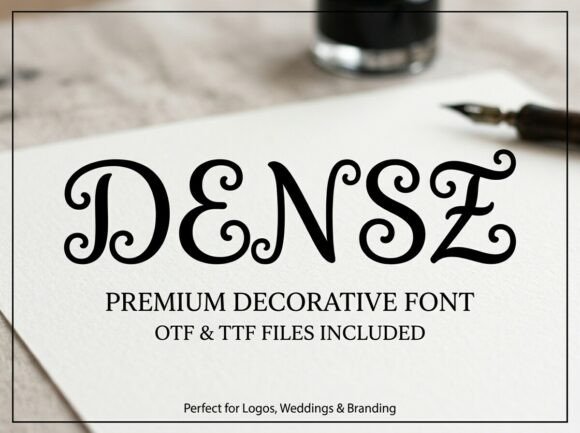
There I was, staring at a blank brand board, trying to find the right visual language for a small café that wanted to feel both refined and approachable. The client had mentioned something about "timeless sophistication," which immediately made me think of serif fonts with character. That’s when I stumbled on Dense—a premium decorative serif font that felt like it was made for exactly this kind of project.
Dense for Logo Design and Brand Identity
Testing Dense on a logo draft was like uncovering a hidden gem. The high-contrast strokes and intricate details gave the typeface a sense of ornamental elegance that stood out without being overwhelming. It wasn’t just about looking good; it felt like it could carry the personality of a brand. For a café, where the visual identity needs to be inviting yet professional, Dense offered a perfect balance.
The font’s unique structure made it ideal for logo work, especially when paired with a simple icon or emblem. It added a touch of class without sacrificing clarity. I found that using Dense as the primary typeface in the logo helped establish a strong visual hierarchy, making it easy to recognize across different mediums.
Dense for Packaging Design and Product Labels
Once the logo was set, I moved on to packaging design. The café needed custom boxes and labels for their coffee beans, and Dense quickly became my go-to choice. Its elegant curves and sharp contrast made it stand out on product packaging, especially when used in bold, short-form text.
I experimented with different sizes and weights, finding that the lighter variants worked well for subheadings or ingredient lists, while the heavier versions were perfect for headlines. The font’s readability was impressive even at smaller sizes, which is crucial for labels that need to be legible from a distance.
Dense for Social Media Graphics and Web Headers
When it came to social media graphics, Dense proved to be a game-changer. I used it for Instagram post headers and promotional banners, where its decorative nature added a sense of luxury. It wasn’t too flashy, but it definitely caught the eye—just what you want for a brand that wants to stand out without being over the top.
On the website, I placed Dense in the hero section, using it for the main headline. The contrast between the bold, ornate text and the clean, modern layout created a dynamic visual effect. It wasn’t overpowering, but it definitely made an impression. I also used it for some call-to-action buttons, where its distinct shape helped guide the user’s attention.
Dense for Editorial Design and Print Materials
For a print brochure, I wanted to maintain a cohesive look across all materials. Dense was the perfect fit for the header sections, giving the document a polished, professional feel. Its detailed letterforms added a level of sophistication that elevated the entire design.
I also used it for a few key phrases in the body copy, keeping it minimal but impactful. The font’s versatility allowed it to work in both large and small contexts, which is essential for editorial design where consistency is key. It didn’t feel out of place in a more traditional layout, proving that it can adapt to different design styles.
Dense for Business Cards and Shop Signage
Business cards are often the first point of contact for a brand, so they need to make a strong impression. I tried using Dense for the name and title on a business card, and it looked fantastic. The font’s intricate details gave it a handcrafted feel, which aligned perfectly with the café’s brand image.
For shop signage, I used a larger version of the font, ensuring it was readable from a distance. The high-contrast strokes made it stand out against the background, and the overall aesthetic felt warm and welcoming. It wasn’t too ornate, which is important for a sign that needs to be functional as well as beautiful.
Dense for Font Pairing and Typographic Harmony
One thing I learned while working with Dense is the importance of font pairing. While it works beautifully on its own, it also pairs well with other typefaces. I experimented with a sans-serif font for body text, which provided a nice contrast and kept the design from feeling too busy.
For a more modern look, I paired it with a script font for a special promotion. The combination was elegant and fresh, showing how versatile Dense can be. It’s also great when used as an accent font, adding a touch of flair without stealing the spotlight.
Dense for Commercial Use and Licensing
As a designer, one of the first things I check when considering a new font is its licensing. Dense comes with commercial use rights, which is essential for any branding project. It’s available in multiple file formats, making it easy to integrate into different design workflows.
The font includes various weights and alternate characters, which is helpful when creating a full brand system. I also appreciated the multilingual support, which ensures that the font can be used in a variety of contexts without issues. This level of detail makes it a reliable choice for any creative project.