Culex Font Review
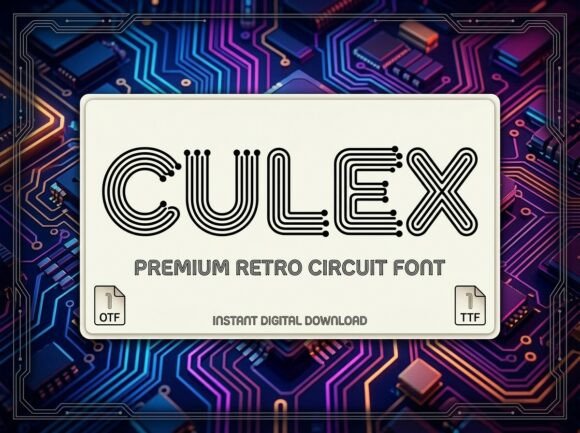
As a handmade seller who spends hours refining every detail of my shop listings, I always look for fonts that bring energy and personality to my designs. Culex is one of those rare typefaces that feels like it was made for makers—bold, modern, and full of visual rhythm. Testing it on candle labels, greeting cards, and packaging mockups, I found that Culex brings a cybernetic-and-cinematic soul to any project that needs a little extra flair.
Culex for Candle Labels and Product Tags
One of the first places I tried Culex was on candle labels. The font’s geometric structure and sharp angles gave each label a high-voltage feel that stood out against simpler, more traditional fonts. I used it for the product name and scent description, and it added a sleek, futuristic touch that felt right at home with my modern candle line. The bold letterforms also worked well for small tags, even when cut with a Cricut or Silhouette machine. As long as the text wasn’t too small, the details held up nicely.
For product tags, I paired Culex with a clean sans serif font for the price and ingredient list. This contrast helped balance the design without overwhelming the eye. The font’s rhythm made it feel dynamic, which was perfect for a brand that wanted to stand out in a crowded market.
Culex for Greeting Cards and Invitations
When I designed a set of birthday invitations, Culex became the star of the show. Its cybernetic aesthetic gave the cards a unique edge that felt both modern and artistic. I used it for the event title and guest names, and the result was striking. The font’s geometric shapes and strong lines made it ideal for short phrases, especially when paired with a simple background or pattern.
I also tested it on a wedding invitation mockup. While Culex might not be the first choice for a classic wedding, it worked well for a more contemporary or tech-inspired theme. The font’s boldness helped the text command attention, and its rhythmic flow gave the design a sense of movement that felt almost cinematic.
Culex for Digital Printables and Wall Art
For printable wall art, Culex was a game-changer. I created a set of seasonal quotes and used the font for the main text. The way the letters interacted with the background—whether a minimalist white space or a textured paper effect—was visually compelling. It felt like the font had its own energy, making the designs more engaging and memorable.
When designing digital templates, I found that Culex worked best for titles, headings, and decorative elements. It wasn’t ideal for long paragraphs, but as a display font, it excelled at drawing the eye and setting the tone. Pairing it with a soft script font for body text gave the designs a nice balance between bold and elegant.
Culex for Tote Bags and Merchandise
Testing Culex on a tote bag design, I was impressed by how it translated to fabric. The font’s strong lines and angular shapes looked crisp when printed, and it didn’t lose its impact at larger sizes. I used it for the main slogan, and the result was a piece of merchandise that felt both stylish and professional.
On shirts and mugs, Culex added a fresh, modern look that appealed to a younger audience. It worked especially well for slogans or short phrases that needed to make an immediate impression. However, I would avoid using it for long text or detailed instructions, as the font’s style could become difficult to read at smaller sizes.
Culex for Packaging Design and Shop Branding
When updating my packaging design, I chose Culex for the brand name and tagline. The font’s boldness and cinematic vibe aligned perfectly with my brand’s identity, giving the packaging a cohesive and professional look. It also helped create a strong visual presence on social media and in online listings, where first impressions matter a lot.
For shop branding, Culex proved to be a versatile tool. Whether used in logo designs, social media graphics, or listing headers, it consistently brought a sense of energy and creativity. Its geometric structure made it easy to pair with other design elements, and its rhythm gave it a unique character that stood out from more generic display fonts.